Our process
FROM SUBMISSION TO FORENSIC FINDING — A STRUCTURED, DOCUMENTED PROCESS.
Integrated into your onboarding flow. Invisible to genuine customers.


Protect your onboarding pipeline from synthetic face attacks.
.png)
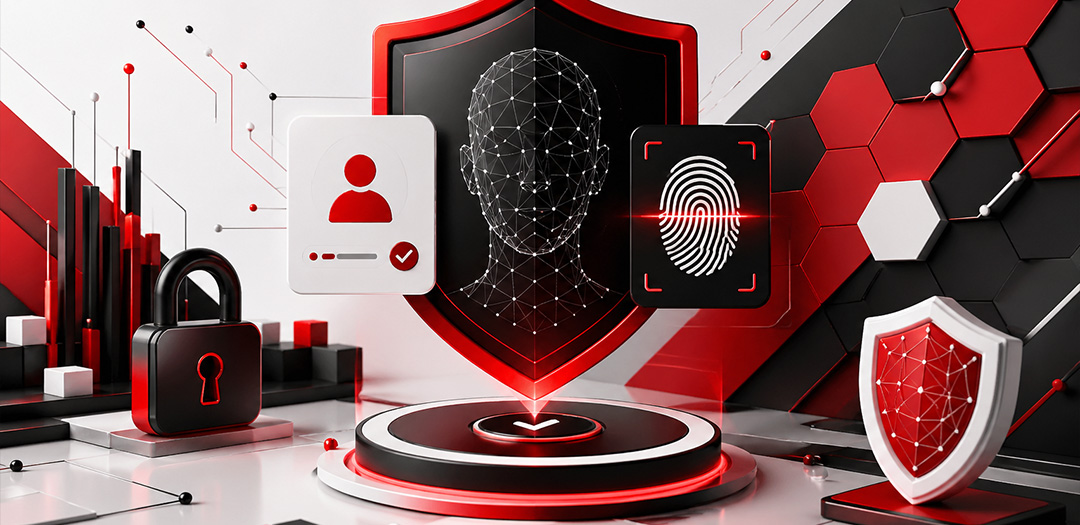
WHY THIS MATTERS
Digital KYC has become the standard for onboarding customers at banks, NBFCs, insurance companies, payment platforms, and digital lenders across India. It is fast, cost-effective, and scalable. It is also vulnerable. Liveness detection systems were designed to prevent human imposters holding up a photograph - not an AI-generated video of a synthetic face that does not exist, or a real-time face-swap operated live during the verification call. Forensic deepfake detection operates at a different level from liveness detection - analyzing the media itself, not just whether the subject is live, to determine whether the face present is genuine or AI-generated.
service details
Everything your organisation receives as part of a KYC hardening engagement.

API integration with your KYC and onboarding system - receiving selfie photographs or videos and returning deepfake probability scores and classification within seconds.
A deepfake probability score and risk classification returned for every onboarding submission, allowing clean submissions to proceed and high-risk submissions to be routed for review or rejection.
Complete forensic analysis for flagged or confirmed attack cases - including manipulation heatmaps, confidence scores, and chain-of-custody documentation.
.avif)
.avif)
.avif)
.avif)
Our process
Integrated into your onboarding flow. Invisible to genuine customers.
WHO WE SERVE
Not a probability score. A defensible forensic finding.
FAQ
Hear what our clients say about our IT and security solutions
.svg)
Liveness detection determines whether a camera is looking at a live human face. Deepfake detection determines whether that face is genuine or AI-generated. A real-time face-swap - where an attacker uses their own face as input and replaces it with a synthetic face in real time - passes liveness detection because it is live. It does not pass deepfake detection, because the synthetic face carries forensic signatures that our analysis identifies.
Our API is designed for integration into live onboarding flows. Response times for photograph analysis are typically under 3 seconds. Short selfie video analysis (under 10 seconds) typically returns within 10–15 seconds. Longer video analysis is available for async processing. Contact our technical team for SLA specifications.
The API returns a high-risk classification and manipulation probability score. Your system routes the submission according to your configured threshold - typically to automatic rejection or manual review. For confirmed attacks, we produce a full forensic report suitable for regulatory notification and law enforcement referral.
Yes. Our integration is designed to work within the RBI's Video Customer Identification Process (V-CIP) framework. We do not replace the regulated KYC process - we add a forensic detection layer that strengthens it against AI-assisted fraud while maintaining compliance with the regulatory workflow.
Forensic document authentication - detecting manipulated or fabricated identity document images - is a related capability that we offer as part of our Forensic Media Authentication service. It can be integrated alongside KYC deepfake detection for comprehensive identity fraud protection.
get started
Tell us about your case. We respond with a forensic assessment plan within one business day.
.svg)
.svg)
.svg)
.svg)