Our process
FROM SUBMISSION TO FORENSIC FINDING - A STRUCTURED, DOCUMENTED PROCESS.
Acoustic forensic analysis built for legal scrutiny.


Identify AI-synthesized and cloned audio with forensic precision.
.png)
WHY THIS MATTERS
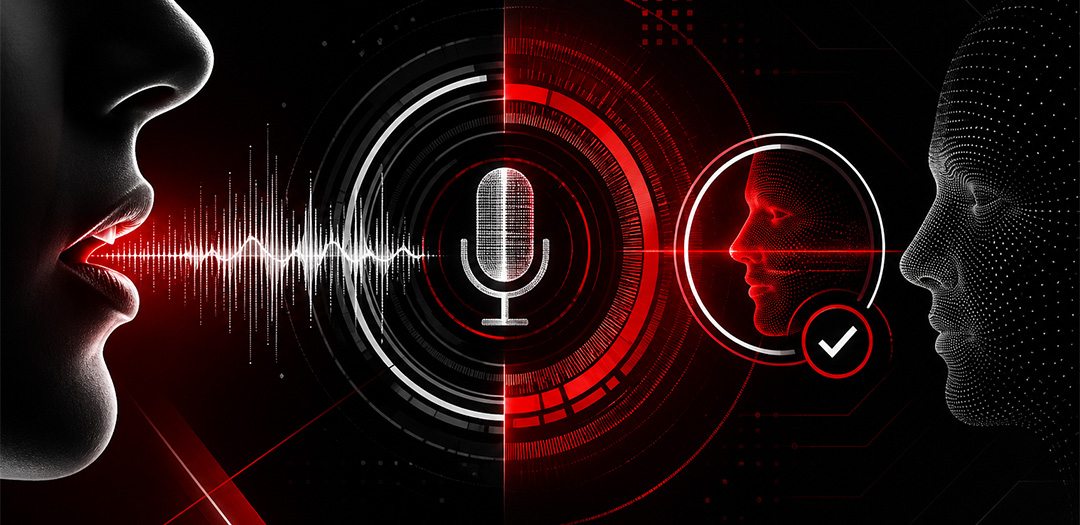
Voice cloning technology has reached a level where a credible imitation of any person's voice can be generated from as little as a few seconds of reference audio. The resulting synthetic voice passes casual listener scrutiny and, in many cases, passes sophisticated phone-based authentication systems. In India, voice-cloned audio is being used to impersonate bank executives and authorize fraudulent transfers, to fabricate statements attributed to political figures and distribute them on WhatsApp before elections, to create false evidence in employment and family disputes, and to bypass voice-biometric security systems. Acoustic forensic analysis detects the machine behind the voice - not through listening, but through the physics of how synthetic speech is generated and the mathematical traces it leaves in the audio signal.
service details
Everything you receive at the conclusion of a voice clone detection engagement.

Structured court-ready PDF with executive summary, methodology disclosure, confidence score, and findings - signed by the forensic analyst.
Annotated waveform and spectrogram outputs showing the acoustic anomalies detected, designed to be presentable as visual evidence in legal proceedings.
Mapping of detected acoustic anomalies across the audio timeline - identifying the specific regions of the recording where synthetic speech indicators are strongest.
.avif)
.avif)
.avif)
.avif)
Our process
Acoustic forensic analysis built for legal scrutiny.
WHO WE SERVE
Not a probability score. A defensible forensic finding.
FAQ
Hear what our clients say about our IT and security solutions
.svg)
Yes. Our acoustic forensic methodology is specifically calibrated for compressed, low-bitrate audio typical of WhatsApp voice notes and phone call recordings. Compression affects audio quality but leaves characteristic forensic signatures of its own, and our analysis accounts for this. We document the impact of compression on confidence levels in the report.
Short audio clips can still be analyzed, though confidence levels are lower with very short samples. As a general guide, clips over 5 seconds yield useful acoustic data; clips over 15 seconds support high-confidence findings. We will always disclose the impact of clip length on our confidence scoring.
Speaker identification - determining the identity of an unknown speaker - is a separate service from voice clone detection. We offer comparative acoustic analysis where a reference voice sample of the alleged speaker is available. We do not perform speculative speaker identification without reference material.
Post-processing (noise addition, re-encoding, pitch shifting) can reduce the visibility of some synthesis artifacts, but it also introduces its own forensic signatures. Our multi-signal approach analyzes convergent evidence across multiple acoustic dimensions, making it significantly harder to evade than single-signal detection. We document cases where post-processing has been applied.
Yes. Video call recordings in MP4, MOV, or WEBM format are accepted. Our pipeline extracts the audio track and analyzes it independently. Video conferencing compression artifacts are well-characterized in our forensic methodology.
get started
Tell us about your case. We respond with a forensic assessment plan within one business day.
.svg)
.svg)
.svg)
.svg)