

.png)
The deepfake problem has quietly crossed a threshold that most people are not prepared for. Just a few years ago, spotting a fake video was relatively straightforward -- blurry edges around the face, unnatural blinking, lip movements slightly out of sync with audio. Today, those tells have largely disappeared. The new generation of AI-generated video content is frighteningly convincing, and the tools used to create it are widely accessible to anyone with a laptop and an internet connection.
Whether you are a journalist verifying source footage, a legal professional handling digital evidence, a corporate security team, or simply someone who received a suspicious video and wants to know if it is real, understanding how modern deepfakes are made and how they are detected has never been more important.
What Makes the New Generation of Deepfakes So Difficult to Detect
The Technology Behind Hyper-Realistic AI Video
Earlier deepfake models relied on face-swapping techniques that required large datasets of training images and often produced visible artifacts. The newer generation of generative models, particularly diffusion-based video synthesis and advanced Generative Adversarial Networks (GANs), can produce full-scene video generation -- not just face swaps. This means the entire visual environment, lighting, skin texture, hair, and micro-expressions can all be synthesized together with a coherence that older methods could never achieve.
These models have also become dramatically better at temporal consistency, meaning the way a face moves naturally from frame to frame is now rendered far more smoothly. This was one of the biggest giveaways in earlier deepfakes, and it has been largely solved by current generation tools.
Audio synthesis has kept pace. Voice cloning technology can now replicate a person's voice from as little as three to five seconds of sample audio, matching not just the tone and pitch but the cadence, breathing patterns, and regional accent of the original speaker. Combined with hyper-realistic video, the result is content that challenges even trained human observers.
Why Human Eyes Alone Are No Longer Enough
Research consistently shows that people perform only marginally better than chance when asked to identify deepfakes without assistance. The uncanny valley effect that used to trigger instinctive suspicion has been significantly reduced. Our visual system evolved to detect inconsistencies in faces that we see in person, not subtle statistical artifacts embedded in compressed video files.
This is precisely why professional forensic analysis has become essential for anyone who needs to verify video authenticity with confidence. Services like those offered by Deepdive Forensics Lab go well beyond what the human eye can assess, applying computational analysis to detect the kinds of signal-level anomalies that synthetic generation invariably leaves behind.
Key Indicators of Deepfake Video: What the Research Shows
Biological Signal Analysis
One of the most promising areas of deepfake detection involves analyzing biological signals that real human faces passively encode in video. Photoplethysmography (rPPG) is a technique that detects subtle color changes in skin caused by blood flow. Real faces exhibit these micro-fluctuations in a way that correlates with a real heartbeat. Synthetically generated faces often fail to replicate this signal accurately, either producing no detectable signal or an irregular one that does not match plausible human physiology.
Similarly, researchers have found that eye movement patterns, including micro-saccades and pupillary response to simulated light changes, are often inconsistent in AI-generated faces. These are involuntary biological behaviors that are extraordinarily difficult to model convincingly.
Compression Artifact Inconsistency
Every video codec compresses visual information using algorithms that treat different parts of the image differently based on movement and complexity. When a deepfake model modifies only part of a frame -- typically the face region -- the compression pattern of that region often differs from the surrounding video in subtle but measurable ways. Forensic tools can map these inconsistencies across a video file to identify regions that were likely altered.
This is one area where amateur detection attempts often fall short. The inconsistencies are not visible to the eye; they exist at the signal level and require dedicated analysis software. If you suspect a video may have been manipulated and you need verified results, reaching out to a professional service is the most reliable course of action. Deepdive Forensics Lab provides exactly this kind of rigorous, evidence-grade analysis at https://deepdiveforensics.com.
Facial Geometry and Landmark Consistency
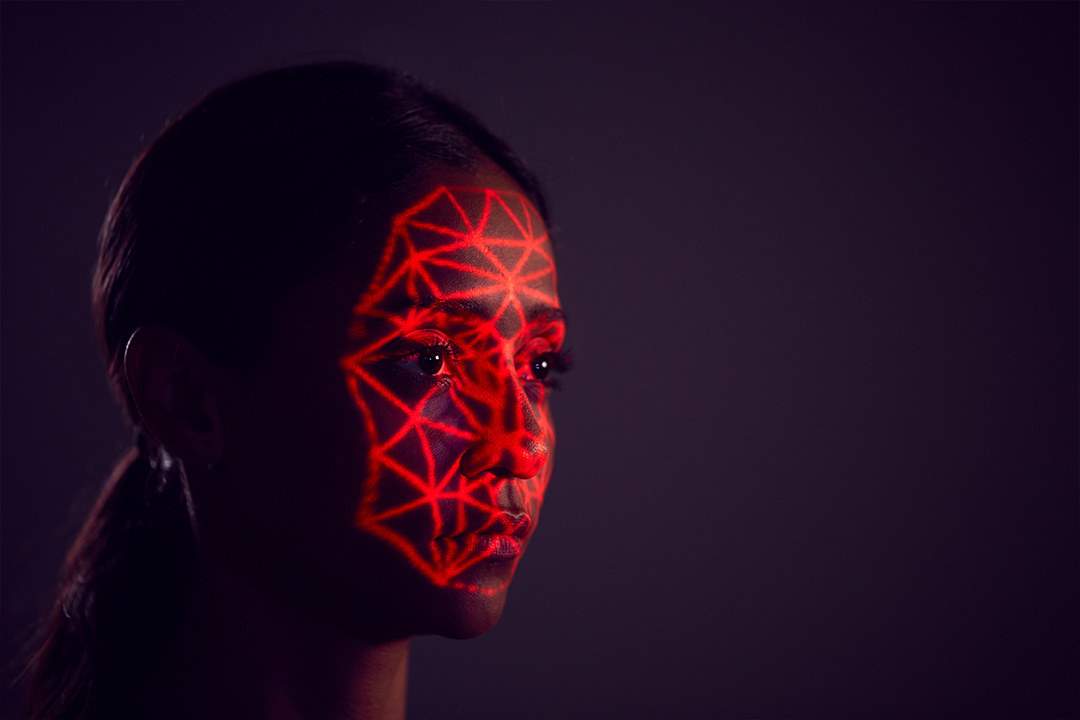
Deepfake models operate by learning the geometry of a face and re-rendering it. This process can introduce subtle inconsistencies in how facial landmarks -- the corners of the eyes, the edges of the lips, the position of the ears relative to the jaw -- remain stable across frames. While modern models handle this much better than earlier versions, under computational analysis using 3D geometric reconstruction, inconsistencies in facial topology often remain detectable.
Lighting and Shadow Coherence
Realistic lighting is computationally expensive to model. Deepfake systems often learn to replicate the broad lighting conditions of a face but struggle with specular highlights (the small bright reflections on eyes and skin), subsurface scattering (how light passes through skin tissue), and the precise way shadows fall across facial contours as the head moves. Forensic analysis that isolates lighting vectors can reveal faces that appear well-lit but are physically inconsistent with the scene around them.
How Deepfakes Are Being Used: The Real-World Threat Landscape
Corporate and Financial Fraud
There have been multiple documented cases in recent years where deepfake audio and video were used to impersonate senior executives in video calls, leading employees to authorize fraudulent wire transfers. In one widely reported incident, a finance employee was deceived into transferring tens of millions of dollars after a video call featuring a convincing deepfake of the company's CFO. The financial sector has been scrambling to establish video verification protocols, and forensic services have become part of the due diligence toolkit for high-value transactions.
Misinformation and Political Manipulation
Synthetic media has become a tool in political disinformation campaigns globally. Fabricated videos of political figures making statements they never made, or appearing in situations that never occurred, can spread across social media platforms in hours, reaching millions of viewers before any fact-checking or forensic analysis can be published. The speed asymmetry between viral misinformation and methodical verification is one of the defining challenges of the current media environment.
News organizations, fact-checking outlets, and political campaigns all benefit from having access to forensic video analysis capabilities. Deepdive Forensics Lab works with organizations that need rapid, professional assessment of potentially manipulated media -- you can learn more about these services at https://deepdiveforensics.com.
Personal Harm and Non-Consensual Synthetic Media
A significant and deeply concerning use of deepfake technology involves the creation of synthetic explicit content featuring real, identifiable individuals without their consent. The legal and psychological harm caused by this content is well-documented, and law enforcement agencies in numerous jurisdictions are increasingly treating it as a serious criminal matter. Victims seeking to document and report this content for legal purposes need verified forensic evidence to support their cases, and professional analysis provides the kind of chain-of-custody documentation that legal proceedings require.
Evidentiary Integrity in Legal Proceedings
Courts around the world are grappling with how to handle digital video evidence in an era when any video could theoretically be fabricated. Defense attorneys and prosecutors alike now face questions about the authenticity of surveillance footage, mobile phone recordings, and other video evidence. Forensic video authentication, conducted by qualified experts using documented methodologies, is increasingly being called upon to establish or challenge the integrity of digital evidence.
Current Detection Technologies: The Forensic Toolkit
AI-Based Detection Models
Just as generative AI has advanced, so have detection systems trained specifically to identify synthetic media. These models are trained on large datasets of both authentic and fabricated video, learning to recognize the statistical fingerprints that generation models leave behind. However, this is an arms race: as detection models improve, generation models are updated to evade them, and vice versa.
This is why leading forensic services do not rely on any single detection approach. A multi-layered methodology that combines AI-based analysis with signal processing and human expert review is the current standard for reliable results.
Metadata and Provenance Analysis
Video files contain metadata that, when intact, can provide information about the camera used, the time and location of recording, and the software that processed the file. Manipulated files often show anomalies in their metadata -- timestamps that are inconsistent, software signatures that do not match the stated origin, or metadata that has been stripped entirely. While savvy forgers know to sanitize metadata, anomalies and omissions are still informative to a trained forensic analyst.
Content provenance standards are also emerging as a longer-term solution. Initiatives like the Coalition for Content Provenance and Authenticity (C2PA) are working to establish cryptographic signing standards that allow cameras and software to attach verifiable certificates of origin to media files. As these standards are adopted, they will make it significantly harder to pass off synthetic media as authentic footage captured by a real device.
Spectral and Frequency Domain Analysis
Analyzing video in the frequency domain rather than the spatial domain reveals information that is entirely invisible to the eye. Synthetic generation processes create characteristic patterns in the frequency spectrum of video frames -- regularities that differ from the natural, somewhat chaotic frequency signatures of real-world footage captured by a physical camera lens and sensor. This kind of analysis is a core component of professional forensic examination.
If you are dealing with video content that requires this level of scrutiny, Deepdive Forensics Lab offers comprehensive forensic examination services tailored to legal, corporate, and media clients. Visit https://deepdiveforensics.com to explore what a professional analysis can cover.
Practical Steps Anyone Can Take Right Now
While professional forensic analysis remains the gold standard for consequential decisions, there are practical habits that can reduce your vulnerability to deepfake deception in everyday situations.
Verify identity through out-of-band channels. If you receive a video call from someone asking you to take an unusual action -- especially one involving money, data access, or sensitive information -- hang up and call that person back on a number you already have on file. Do not use contact information provided in the suspicious communication.
Look for context mismatches. Even when a face and voice are convincing, deepfake videos sometimes contain contextual errors: backgrounds that do not match the claimed location, seasonal mismatches in clothing or lighting, or other environmental inconsistencies.
Be skeptical of high-pressure urgency. Deepfake fraud relies on getting the target to act before they have time to think critically. Any communication that creates artificial urgency around a decision involving money or sensitive access should trigger additional verification steps regardless of how convincing it appears.
Slow the video down. Many consumer video players allow you to slow playback significantly. At very slow speeds, temporal artifacts in deepfakes sometimes become visible -- slight flickering around the face boundary, inconsistent motion blur, or unnatural micro-expressions.
For anything beyond these basic checks, professional analysis is necessary. Do not rely on free online deepfake detection tools for high-stakes decisions; many of these tools use outdated models and provide no documentation of their methodology or confidence levels.
Wrapping Up: The Stakes Have Never Been Higher
The arrival of hyper-realistic deepfake video is not a future concern -- it is the present reality. The technology to create convincing synthetic media is already widely deployed, and the use cases range from harmless creative applications to serious crimes and geopolitical manipulation. The gap between what the human eye can detect and what AI can fabricate has grown to the point where institutional and professional responses are now required.
Staying informed about how these technologies work is the first step. Establishing verification protocols before you need them is the second. And knowing where to turn when you encounter video content that requires expert analysis is the third.
Deepdive Forensics Lab exists specifically to serve individuals, organizations, legal teams, and media professionals who need reliable, documented, expert-level forensic analysis of digital video. Whether you are dealing with potential fraud, legal evidence, reputational threats, or media verification, their team is equipped to provide the rigorous analysis the situation demands.
Start by learning what professional video forensics can do for your specific situation at https://www.deepdiveforensics.ai.

.svg)
.svg)
.svg)
.svg)