

.png)
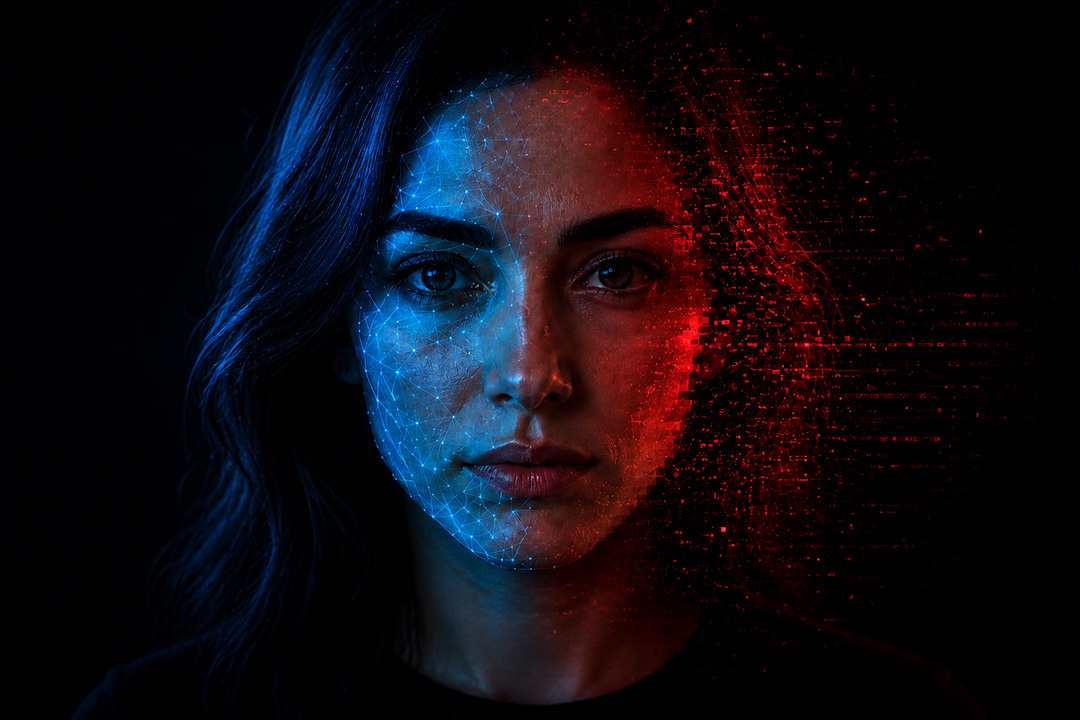
Detection has always been a reactive discipline, analyzing content after it's already been created and circulated, trying to determine after the fact whether it's genuine. Digital watermarking approaches the problem from the other direction. Rather than asking "can we detect that this was manipulated," it asks "can we embed verifiable proof of authenticity at the moment of creation." As deepfake generation continues to improve, this proactive approach has become an increasingly important complement to traditional detection.
This post explains how digital watermarking actually works, the different technical approaches in use, and what organizations need to know to implement it effectively. This proactive authentication layer is a core part of the media integrity and watermarking work Deepdive Forensics Lab does with organizations building defenses against synthetic media.
What Digital Watermarking Actually Means in This Context
Digital watermarking for media authenticity is distinct from the older, more familiar concept of visible copyright watermarks overlaid on an image. Modern authenticity watermarking typically embeds imperceptible, cryptographically verifiable information directly into a piece of media at the point of creation, information that can later be used to confirm the content's origin and detect whether it's been altered since.
This information can include the capture device, timestamp, creator identity, and a cryptographic hash of the original content, all embedded in a way that's designed to survive normal distribution while remaining detectable to verification tools, and ideally, to break or flag clearly if the content is subsequently manipulated.
The Two Main Technical Approaches
Invisible Embedded Watermarking
This approach embeds a signal directly into the pixel or audio data of the file itself, in a way that's imperceptible to human viewers or listeners but detectable by software designed to look for it. A well-designed embedded watermark is built to survive common transformations, compression, resizing, format conversion, while still being detectable afterward, and ideally to show measurable degradation or absence if the underlying content has been substantively altered.
Metadata-Based Provenance Standards
Rather than altering the content itself, this approach attaches cryptographically signed metadata to the file, documenting its creation details and edit history in a tamper-evident way. The most widely adopted standard in this space is C2PA, the Coalition for Content Provenance and Authenticity, which provides a structured, interoperable format for this kind of provenance data, backed by a broad coalition of technology and media companies.
Many practical implementations combine both approaches, using C2PA-style provenance metadata alongside embedded signals, since each offers different resilience properties against different kinds of tampering or metadata stripping.
Why Watermarking Alone Isn't a Complete Solution
It Only Works for Content Watermarked at Creation
Watermarking can only authenticate content that was watermarked at the point of capture or creation. It offers no help verifying the vast body of existing content already in circulation, and it does nothing to address content created outside a watermarking-enabled system in the first place, which includes most deepfakes by definition, since attackers have no incentive to watermark fabricated content as synthetic.
Watermarks Can Be Stripped or Degraded
Many platforms strip metadata during upload, and aggressive compression or format conversion can degrade or eliminate embedded signals, even ones designed for resilience. A watermarking system needs to be evaluated specifically on how well it survives the kinds of transformation content typically undergoes across real-world distribution channels, not just in controlled testing conditions.
Absence of a Watermark Isn't Proof of Fabrication
Because watermarking adoption remains far from universal, and because legitimate content is routinely stripped of metadata by platforms, the absence of a watermark cannot be treated as evidence that content is fabricated. This is a critical distinction, since misapplying that logic would incorrectly flag enormous volumes of authentic, simply unwatermarked content.
Practical Implementation Considerations for Organizations
Start With High-Value, High-Risk Content Categories
Rather than attempting to watermark every piece of content an organization produces, a practical starting point focuses on categories carrying the most reputational or evidentiary risk, official executive communications, press releases, product announcements, and content likely to be disputed or targeted for fabrication.
Choose Standards With Broad Industry Adoption
Implementing a proprietary watermarking approach that platforms and verification tools don't recognize limits practical value considerably. Standards like C2PA benefit from broad industry backing, which means verification tools and major platforms are more likely to recognize and display the provenance information consistently.
Understand the Full Content Lifecycle
Effective implementation requires thinking through the entire path content takes after creation, internal editing workflows, external distribution, syndication to other platforms, since watermarking value depends on the signal surviving that full journey, not just existing at the point of creation.
Pair Watermarking With Traditional Detection Capability
Given that watermarking only addresses content watermarked at the source, organizations still need traditional detection capability for everything else, unwatermarked legitimate content that needs authentication, and fabricated content that will never carry a legitimate watermark in the first place.
Helping organizations design and implement this kind of practical, standards-based watermarking approach, integrated with broader detection capability, is central to the media integrity and watermarking services Deepdive Forensics Lab provides.
How Watermarking Complements Detection Rather Than Replacing It
Watermarking and detection address different sides of the same problem. Detection tries to identify fabricated content after the fact, working against an evolving and often unknown set of generation techniques. Watermarking tries to make authentic content verifiable at the source, shifting some of the burden of proof rather than trying to catch every possible fabrication technique.
Neither approach is sufficient alone. A comprehensive media integrity strategy uses watermarking to protect an organization's own authentic content while maintaining detection capability for everything else, including fabricated content falsely attributed to that organization.
A Misconception Worth Correcting
There's a tendency to treat watermarking adoption as a solution to the deepfake problem broadly, an assumption that once watermarking is widespread enough, detection will become unnecessary. This misunderstands the asymmetry involved. Bad actors creating fabricated content have no incentive to watermark it accurately, and in many cases have active incentive to fabricate false provenance data instead. Watermarking helps authentic content prove itself; it does very little to prevent fabricated content from being created in the first place.
The Bottom Line
Digital watermarking represents a genuinely valuable, proactive complement to traditional deepfake detection, giving organizations a way to make their own authentic content verifiable at the source rather than relying solely on after-the-fact analysis. But it addresses only part of the broader authenticity challenge, and it works best as one layer within a comprehensive strategy rather than a standalone solution.
Organizations implementing watermarking effectively start with high-value content, adopt broadly recognized standards like C2PA, and maintain traditional detection capability for the content watermarking can't reach.
Helping organizations build this kind of layered authenticity strategy, combining watermarking with detection, is the work Deepdive Forensics Lab does through its media integrity and watermarking services.





.svg)
.svg)
.svg)
.svg)