

.png)
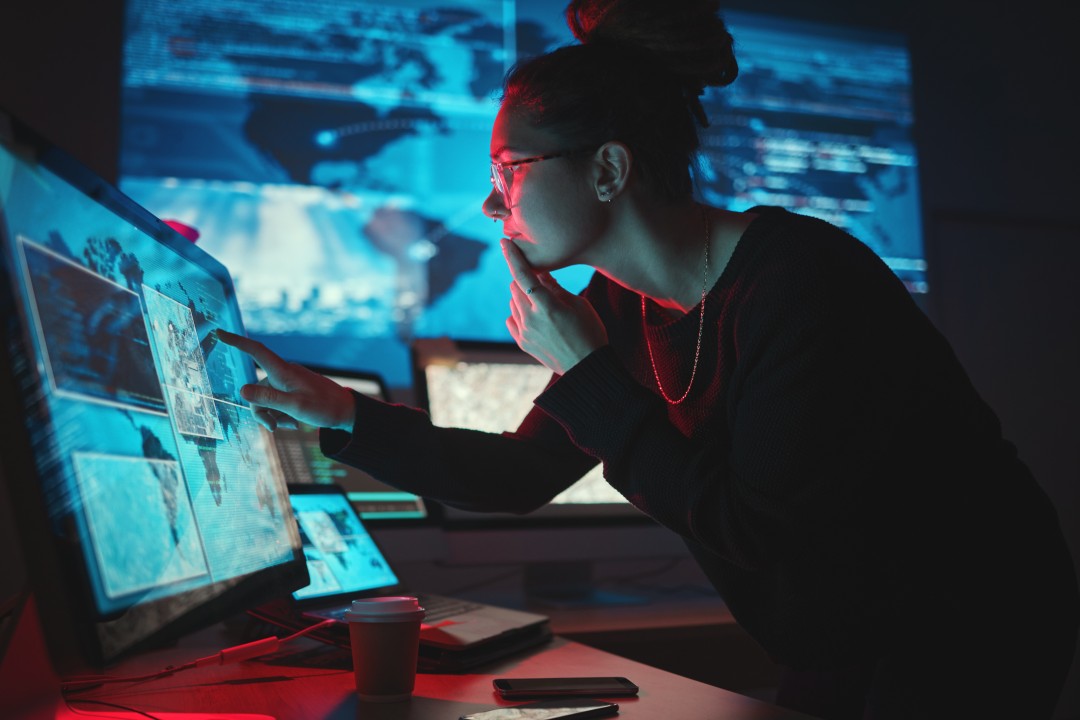
Digital crime does not wait. As technology evolves at a relentless pace, law enforcement agencies around the world are struggling to keep up with criminals who exploit every new tool, platform, and protocol available to them. Digital forensics, once a niche field, has become one of the most critical disciplines in modern investigations. Yet the challenges are mounting faster than most agencies can address them.
From encrypted smartphones to AI-generated deepfakes, the battlefield has shifted dramatically. This post breaks down the ten most pressing digital forensics challenges law enforcement faces today and explains why specialized expertise is no longer optional.
1. Encryption and Locked Devices
Perhaps the single most debated challenge in law enforcement forensics, encryption continues to be a significant barrier to investigations. Modern smartphones, laptops, and cloud accounts are protected by end-to-end encryption that can render even lawfully obtained devices completely inaccessible.
Why This Matters
When a suspect uses full-disk encryption or an encrypted messaging app, investigators may recover a device but be completely locked out of its contents. Without the correct credentials or a vulnerability to exploit, the data remains out of reach. Legal battles around compelled decryption further complicate the picture, as courts remain divided on whether forcing a suspect to unlock a device violates constitutional protections.
Agencies dealing with these roadblocks can benefit from working with a dedicated forensics partner. Deepdive Forensics Lab provides advanced device examination services that apply the latest research and tools to help investigators recover critical evidence from secured devices.
2. Cloud Storage and Jurisdictional Complexity
Criminals increasingly store data in the cloud, often across servers located in multiple countries. This creates a jurisdictional nightmare for law enforcement.
Cross-Border Data Challenges
A single investigation might involve data hosted on servers in the United States, Ireland, Singapore, and Brazil simultaneously. Obtaining that data legally requires navigating mutual legal assistance treaties (MLATs), which can take months or even years. By then, the data may have been deleted or the suspect long gone.
Even within a single country, different cloud providers have different data retention policies and varying levels of cooperation with law enforcement. The legal frameworks governing cloud data access are still catching up to the technology itself.
3. Volatile and Ephemeral Data
Traditional forensics relied on physical evidence that stayed in place. Digital evidence is far more fragile. Volatile data, such as information stored in RAM, active network connections, and running processes, disappears the moment a device is powered off.
The Challenge of Live Forensics
Investigators increasingly need to conduct live forensic acquisition before powering down a suspect's device. This requires both technical skill and split-second decision-making at the scene. Improper handling at this stage can result in evidence loss that cannot be undone.
Training officers to recognize when live acquisition is necessary and how to execute it without contaminating evidence is a persistent challenge for agencies with limited forensic resources.
4. The Sheer Volume of Digital Evidence
Modern investigations generate enormous quantities of data. A single cybercrime case may involve terabytes of emails, documents, images, logs, and communications. Processing this data in a timely fashion is a genuine operational challenge.
Backlog and Case Delays
Many law enforcement digital forensics labs across India and globally are reporting significant backlogs. Cases that require forensic analysis are being delayed by weeks or months, which can affect prosecutorial timelines and, in some cases, result in charges being dropped.
Automated tools help, but they require expert oversight to ensure accuracy and legal defensibility. Outsourcing to a trusted partner like Deepdive Forensics Lab can significantly reduce backlog pressure while maintaining evidentiary standards.
5. Anti-Forensics Techniques
Sophisticated cybercriminals are well aware that investigators use forensic tools. As a result, they actively use counter-forensics methods to destroy, obscure, or manipulate evidence.
Common Anti-Forensics Tactics
These tactics include file wiping and overwriting tools that make deleted files unrecoverable, steganography (hiding data inside innocent-looking images or audio files), timestamp manipulation to confuse timelines, and the use of anonymizing networks such as Tor or VPNs to mask identity and activity.
Staying ahead of anti-forensics requires continuous training and access to cutting-edge tools. Investigators who encounter signs of evidence tampering should engage forensic specialists early in the process.
6. Cryptocurrency and Blockchain Investigations
Financial crime has gone digital in a major way. Ransomware payments, dark web transactions, and money laundering increasingly flow through cryptocurrency networks that were specifically designed to be pseudonymous.
Tracing Digital Currency
While blockchain transactions are technically public, connecting wallet addresses to real-world identities is a specialized skill. Tools like blockchain analytics software exist, but their effective use requires significant expertise. Additionally, privacy-focused coins and mixing services are designed specifically to break the transaction trail.
Law enforcement agencies that lack in-house cryptocurrency forensics expertise often find themselves unable to follow the money, which is critical in financial crime investigations. Deepdive Forensics Lab offers financial crime forensics support to help investigators trace and document digital currency flows for use in prosecution.
7. AI-Generated Evidence and Deepfakes
Artificial intelligence has introduced a new category of forensic challenge that did not exist even a few years ago. Deepfake videos, AI-generated audio, and synthetic images are now accessible to anyone with a basic laptop and an internet connection.
The Authentication Problem
When a video or audio recording is submitted as evidence, investigators must now be able to verify its authenticity. Is that recording of a suspect really genuine, or was it fabricated or manipulated using AI? Conversely, a genuine piece of evidence might be challenged in court as a potential deepfake, casting doubt on real recordings.
Developing robust methodologies for AI-generated content detection is an urgent priority in the forensics field. This is an area where the technology is evolving faster than established forensic standards, which creates real risk in criminal proceedings.
8. IoT Devices as Evidence Sources
The Internet of Things has expanded the range of potential evidence sources enormously. Smart speakers, fitness trackers, connected vehicles, home security cameras, and smart appliances all generate data that can be forensically relevant.
Extraction and Standardization Challenges
The problem is that IoT devices use a vast range of proprietary operating systems, data formats, and storage methods. There is no standardized forensic methodology for extracting data from all these devices. Evidence extraction from an Amazon Echo operates entirely differently from pulling data off a Tesla's onboard computer or a Fitbit.
Additionally, much of this data is transmitted to the cloud rather than stored locally, which brings the jurisdictional and legal access challenges discussed earlier back into play.
Investigators dealing with IoT evidence are strongly encouraged to consult with specialists who stay current on the rapidly expanding landscape of connected devices. Deepdive Forensics Lab works with law enforcement to identify, preserve, and analyze evidence from a wide range of IoT sources.
9. Legal and Admissibility Issues
Collecting digital evidence is only half the battle. Making sure that evidence is admissible in court is an entirely separate challenge that requires careful attention to legal standards, chain of custody documentation, and forensic methodology.
Chain of Custody in the Digital World
Unlike a physical piece of evidence stored in a sealed bag, digital evidence can be copied, altered, or transmitted without leaving obvious physical traces. Maintaining an unimpeachable chain of custody for digital evidence means using write blockers during acquisition, generating cryptographic hash values to verify integrity, documenting every access and action taken on the evidence, and working within established forensic frameworks that courts recognize.
Defense attorneys are increasingly sophisticated about challenging digital evidence on technical grounds. A forensic report that does not meet evidentiary standards can undermine an otherwise strong case.
Keeping Up with Case Law
The legal landscape around digital evidence is also shifting constantly. Court decisions around cell-site location information, device searches at borders, social media evidence, and third-party data are regularly redefining what law enforcement can and cannot do. Forensic practitioners must keep pace with these changes to ensure their methods remain legally sound.
10. The Skills Gap and Resource Constraints
Underlying all the above challenges is a fundamental resource problem. Digital forensics is a highly specialized discipline that requires ongoing education and training. Yet many law enforcement agencies, particularly at the state, local, and district levels, do not have the budget or personnel to maintain in-house digital forensics expertise at the level modern investigations demand.
The Expertise Shortage
Certified digital forensics professionals are in high demand across both the public and private sectors. Salaries in the private sector are often significantly higher than what public agencies can offer, making recruitment and retention a persistent problem. As a result, cases that require forensic analysis may sit in a queue for months waiting for an understaffed lab to process them.
Training That Cannot Keep Pace
Even when agencies have forensic personnel, keeping their training current is a challenge. The tools, platforms, and criminal techniques that investigators encounter are changing continuously. What worked in 2022 may be inadequate in 2026. Regular investment in professional development is essential but often deprioritized when budgets are tight.
This is precisely why many law enforcement agencies are turning to external forensics partners for support on complex or high-volume cases. Deepdive Forensics Lab provides expert forensic support to law enforcement teams, offering certified analysis, court-ready reporting, and the specialized expertise that agencies may not be able to maintain in-house.
Wrapping Up: Bridging the Digital Forensics Gap
The challenges facing law enforcement in the digital forensics space are not going away. If anything, they are intensifying as technology becomes more sophisticated, more widespread, and more deliberately exploited by those seeking to evade accountability.
Addressing these challenges requires investment in training, tools, legal frameworks, and expert partnerships. No single agency can realistically stay ahead of every technological development on its own. Collaboration, outsourcing to vetted specialists, and building relationships with experienced forensic partners are all part of building a sustainable capability.
Whether your agency is dealing with a locked encrypted device, a cryptocurrency trail gone cold, or a backlog of cases waiting for analysis, expert help is available. Visit Deepdive Forensics Lab to learn how their team supports law enforcement with certified, court-ready digital forensics services built for the demands of modern investigations.


.svg)
.svg)
.svg)
.svg)