
.png)
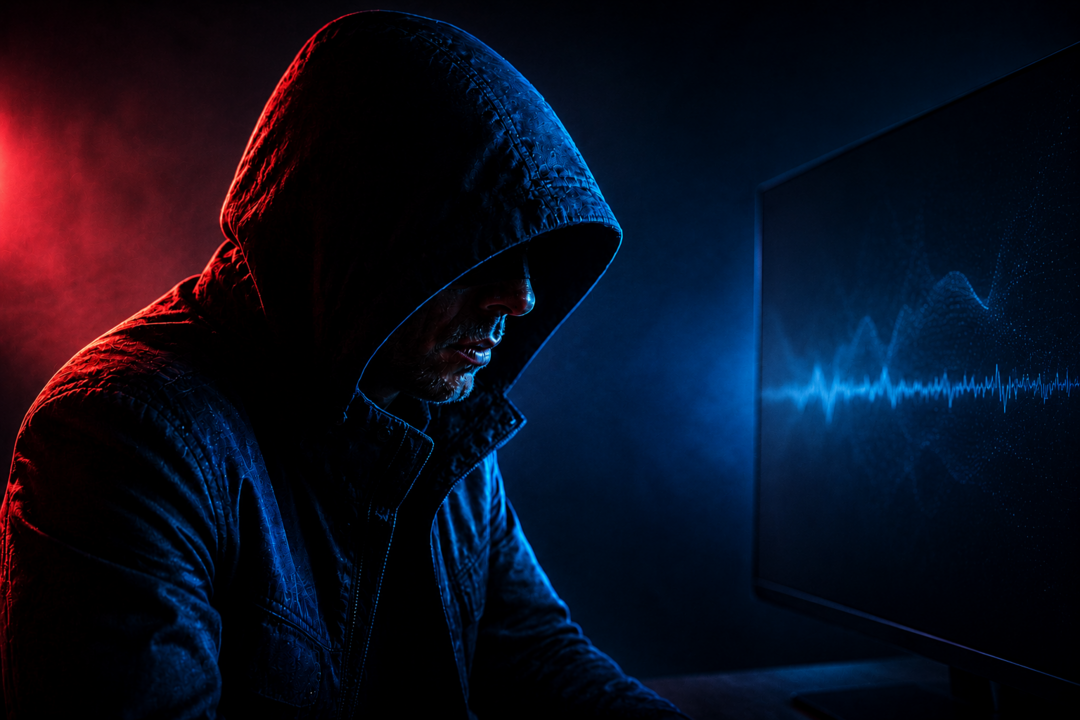
A newsroom used to worry about sourcing, fact-checking claims, and confirming quotes. Now it also has to ask a more basic question about the raw material itself: is this video, image, or audio actually what it appears to be. Deepfakes have added an entirely new verification layer to journalism, one that most editorial workflows weren't originally built to handle, and the cost of getting it wrong, publishing fabricated content or wrongly dismissing authentic footage, carries real consequences for a newsroom's credibility.
This post looks at how journalists and newsrooms are adapting their verification processes for the deepfake era, the specific techniques being incorporated into editorial workflows, and where the limits of current practice remain. This is a workflow challenge closely tied to the forensic media authentication training Deepdive Forensics Lab provides to journalists and media organizations.
Why Traditional Editorial Verification Isn't Enough
Standard journalistic verification has long focused on source credibility, corroboration, and factual accuracy, checking whether a claim holds up, whether a source is reliable, whether multiple independent accounts align. This process assumes the underlying media, the photo, video, or audio in question, is what it claims to be.
Deepfakes break that assumption. A visually convincing video from a seemingly credible source can now be entirely fabricated, and traditional editorial verification methods have no built-in mechanism for catching that specific failure mode. This has forced newsrooms to build technical media verification into their process alongside, not instead of, traditional journalistic verification.
Building Media Verification Into the Editorial Workflow
Provenance Checks as a First Step
Before any deeper technical analysis, many newsrooms now start by checking for content provenance signals, C2PA credentials where available, platform metadata, upload history, and original source tracing. Content lacking expected provenance data, or with a provenance trail that doesn't match its claimed origin, is treated as requiring deeper scrutiny before publication.
Reverse Image and Video Search
A straightforward but still valuable first check involves searching for whether an image or video has appeared previously in a different context, which can reveal manipulated context even when the underlying media itself is authentic. This remains one of the more accessible verification steps for newsroom staff without specialized forensic training.
Cross-Referencing Multiple Independent Sources
Where possible, newsrooms verify significant visual content against multiple independent sources or vantage points of the same event. Content that can't be corroborated by any independent source, particularly for a high-stakes or unusually convenient piece of footage, warrants additional scrutiny before publication.
Technical Forensic Review for High-Stakes Content
For content that will inform a major story, particularly anything involving public figures, breaking news, or politically sensitive material, many newsrooms have established a threshold for escalating to dedicated technical forensic review, frequency domain analysis, biometric consistency checks, metadata examination, rather than relying on editorial judgment alone.
Common Red Flags Newsroom Staff Are Trained to Recognize
Not every piece of content requires full forensic analysis, but training newsroom staff to recognize warning signs helps triage what needs escalation.
- Unusually convenient timing or content that seems to perfectly confirm an existing narrative without independent corroboration
- Inconsistent lighting, reflections, or shadows that don't match the claimed setting
- Audio that doesn't quite sync with lip movement, or emotional tone that doesn't match delivery
- Content arriving through an unverified or newly created source account with no prior track record
- Absence of expected metadata or provenance information for content claiming a specific, verifiable origin
- Content that surfaces suspiciously close to a high-stakes moment, an election, a market event, a breaking crisis, in a way that seems timed for maximum impact
The Speed vs. Accuracy Tension in Newsrooms
Journalism has always operated under competitive time pressure, and deepfake verification adds a genuine tension to that dynamic. A thorough forensic review takes time that a competitive news environment doesn't always accommodate, particularly for breaking news where being first carries real value.
Newsrooms navigating this well have generally adopted a tiered response: content that's central to the story and carries high stakes if wrong gets full verification before publication regardless of competitive pressure, while lower-stakes visual content supporting a broader story might proceed with lighter verification, clearly caveated where appropriate.
This mirrors the same triage logic used in other time-sensitive detection contexts like election-period response, prioritizing speed for initial assessment while running more thorough analysis in parallel for anything that will inform a significant editorial decision.
Working With External Forensic Expertise
Building Relationships Before Breaking News Hits
Newsrooms that have an established relationship with forensic analysts can move considerably faster than those trying to source expertise during an active, time-sensitive story. This mirrors the same preparedness principle that matters across other rapid-response deepfake contexts.
Understanding What a Forensic Finding Can and Cannot Establish
Journalists working with forensic analysts benefit from understanding the limits of a given technique, a finding that content shows no signs of manipulation from known techniques is different from a definitive guarantee of authenticity, and reporting needs to reflect that distinction accurately rather than overstating certainty.
Documenting the Verification Process Itself
Given how often authenticity is publicly disputed after publication, particularly for politically sensitive content, newsrooms increasingly document their verification process itself, what checks were run, what the findings were, so they can defend a publication decision if it's later challenged.
Supporting newsrooms in building this kind of structured verification capability, and connecting them with forensic expertise before a crisis hits, is part of the forensic media authentication training Deepdive Forensics Lab provides to media organizations.
A Misconception Worth Correcting
There's a tendency to assume that deepfake verification in journalism is primarily a technical problem requiring specialized software. In practice, many of the most effective safeguards, provenance checks, source corroboration, recognizing red flags, sit closer to traditional journalistic skill than pure technical forensics. Technical forensic review matters for the hardest cases, but it works best layered on top of strong editorial verification habits, not as a replacement for them.
The Bottom Line
Deepfakes have added a genuinely new verification layer to journalism, one that requires newsrooms to authenticate the underlying media itself, not just the claims and sources built around it. The newsrooms handling this well have integrated provenance checks, red-flag recognition, and tiered escalation to technical forensic review directly into their editorial workflow, rather than treating deepfake verification as a separate, occasional concern.
Given how quickly both generation technology and public skepticism are evolving, this is not a one-time process update. It requires ongoing training and, for the highest-stakes content, access to forensic expertise newsrooms can call on quickly when a story demands it.
Building this kind of verification capability into editorial workflows is the work Deepdive Forensics Lab does with journalists and media organizations navigating the deepfake era.

.svg)
.svg)
.svg)
.svg)