
.png)
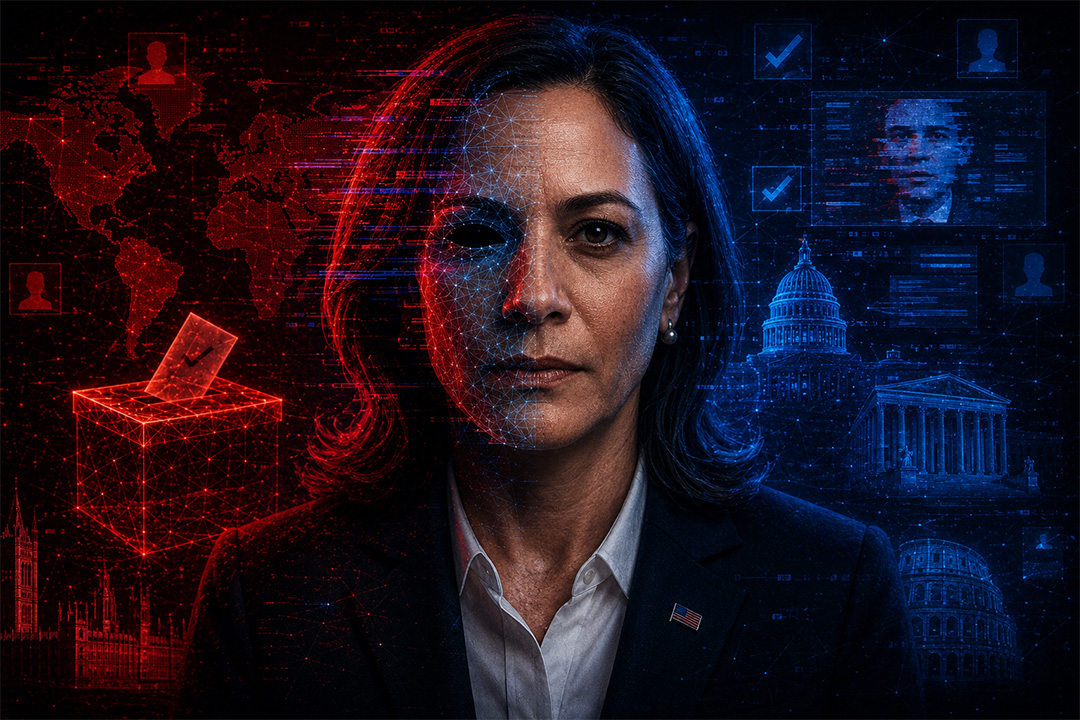
Election deepfakes are no longer a theoretical risk discussed at conferences and in policy papers. They have already appeared in national and regional elections across multiple continents, with documented cases ranging from fabricated candidate audio to AI-generated robocalls impersonating public figures. Looking closely at what actually happened in these cases, rather than the more speculative discussion around the risk in general, offers a clearer picture of how this threat behaves in practice.
This post reviews several documented, publicly reported deepfake incidents from recent election cycles, what made each one significant, and what patterns emerge across them. Understanding these real cases in detail is part of the groundwork behind the election integrity monitoring work Deepdive Forensics Lab does around critical voting periods globally.
Why Documented Cases Matter More Than Hypotheticals
Discussions about election deepfake risk often stay abstract, framed around what could theoretically happen with sufficiently advanced technology. Reviewing real, publicly reported incidents grounds the conversation in what has actually occurred: what content was produced, how it spread, how it was identified, and what response, if any, followed. This is more useful for building actual preparedness than speculation about worst-case future scenarios.
It's worth noting upfront that publicly reported cases likely represent a fraction of total incidents, since many fabrications are caught, contained, or simply never gain enough traction to be widely reported. What follows reflects patterns from cases that did receive public documentation and scrutiny.
Fabricated Robocalls Impersonating Political Figures
One of the most widely reported categories of election deepfake involves AI-generated voice content distributed through robocalls or voice messages, impersonating a candidate or official to discourage voter turnout or spread false voting information. These cases share a common structure: a cloned voice, a message designed to create confusion or discourage participation, and distribution through phone channels that bypass the content moderation systems platforms have built for social media.
What makes this category particularly notable from a forensics standpoint is how effective a relatively low-production, audio-only fabrication can be. Unlike a fabricated video, which still faces meaningful technical hurdles to look fully convincing, cloned voice audio delivered through a phone call has fewer visual cues for a listener to scrutinize, and the phone context itself lends a kind of default credibility many people don't apply to social media content.
Fabricated Candidate Video and Audio Statements
Several documented cases involve synthetic audio or video depicting a candidate making statements, policy positions, or remarks they never actually made. These cases vary considerably in production quality and in how quickly they were identified and addressed, but they share a common pattern of appearing during high-attention moments in a campaign, close to a debate, a major announcement, or the final stretch before voting.
In cases where these fabrications were identified relatively quickly, rapid platform response and coordinated fact-checking appear to have limited, though not eliminated, their spread. In cases where identification took longer, the content had often already reached a substantial audience by the time an authoritative correction circulated.
Manipulated Context Rather Than Fully Synthetic Content
Not every documented election-related media dispute involves a fully AI-generated fabrication. A number of notable cases involve genuine footage that was selectively edited, mislabeled, or presented with a fabricated caption suggesting a different context than what actually occurred. These cases sit at an interesting intersection between deepfake forensics and broader disinformation analysis, since the underlying pixels may be entirely authentic while the presented meaning is not.
This category is worth highlighting because it's often harder to address through purely technical detection. A forensic analysis confirming that video footage is technically unaltered doesn't resolve a dispute about whether the footage has been presented in a misleading context, which requires a different kind of verification entirely, tracing original source, timestamp, and context.
The "Liar's Dividend" in Practice
Several documented cases illustrate a secondary effect that has become increasingly discussed in election integrity circles: genuine, damaging footage or audio of a candidate being dismissed as a deepfake, whether or not that claim holds up to scrutiny. This dynamic gives candidates and their supporters a plausible deniability defense against authentic evidence, simply by invoking the possibility of fabrication.
This pattern is arguably as consequential as the fabrications themselves, because it doesn't require any actual deepfake technology to be used. It only requires deepfakes to exist as a credible possibility in the public consciousness, which they now clearly do.
What These Cases Reveal About Detection and Response Timing
Across documented cases, a consistent pattern emerges around timing. Incidents identified and addressed within hours generally saw more limited spread and impact than those that took days to confirm and correct. This reinforces a point that distinguishes election-focused forensic work from many other applications of deepfake detection: the value of an accurate finding degrades rapidly with time in this specific context, in a way that isn't always true for other forensic use cases like legal evidence review.
Cases also show the value of pre-established verification relationships and rapid-response protocols. Officials and campaigns that had already identified who to contact for urgent forensic review, before an incident occurred, consistently moved faster than those improvising a response process during an active incident.
What These Cases Reveal About Distribution Channels
A notable pattern across documented incidents is how much election-related deepfake content spreads through channels that are harder to monitor than mainstream social media platforms, private messaging apps, direct phone calls, and closed community groups. Content moderation infrastructure built primarily around public social platforms often has limited visibility into these distribution channels, which has meaningful implications for how election integrity monitoring needs to be structured.
This is a pattern Deepdive Forensics Lab factors directly into its election integrity monitoring work, since effective monitoring has to account for where this content actually spreads, not just where it's easiest to observe.
A Misconception Worth Correcting
There's a tendency to assume that documented election deepfake cases primarily involve sophisticated, high-production video content requiring significant technical resources to produce. In practice, some of the most consequential documented cases have involved comparatively simple audio fabrications or manipulated context around genuine footage, both of which are considerably more accessible to produce than a fully convincing synthetic video.
The Bottom Line
Real documented election deepfake cases paint a more specific and, in some ways, more actionable picture than abstract risk discussions alone. They show that audio fabrications and manipulated context are at least as consequential as fully synthetic video, that private and phone-based distribution channels present significant monitoring gaps, and that response speed consistently determines how much damage a fabrication does before correction catches up.
These patterns should directly inform how election officials, campaigns, and platforms prepare for future election cycles, rather than treating each new incident as an unprecedented surprise.
Building monitoring and response capability grounded in these documented patterns, rather than hypothetical worst cases, is the work Deepdive Forensics Lab does through its election integrity monitoring services.

.svg)
.svg)
.svg)
.svg)