

.png)
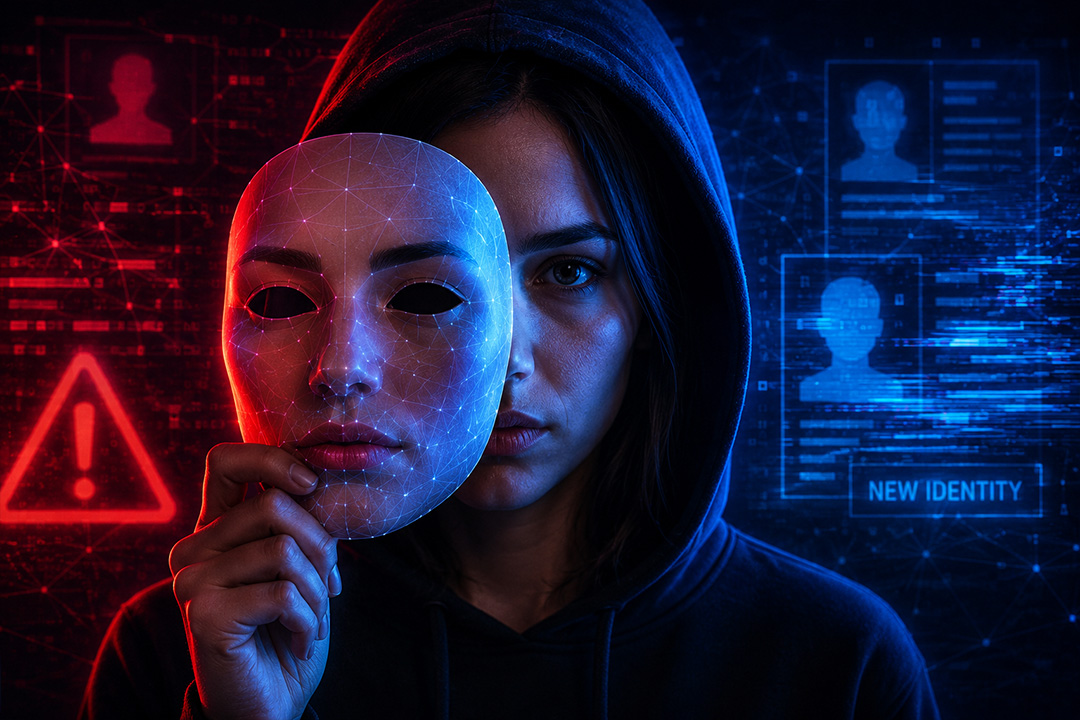
Synthetic identity fraud and deepfake technology developed along separate tracks for years, one rooted in data fabrication and credit system exploitation, the other in generative media. They have since converged into a single, considerably more dangerous threat. A fabricated identity built from stolen data points is far more convincing when it's paired with a synthetic face and voice that can pass biometric checks on demand, and that convergence is exactly what institutions are now contending with.
This post examines how deepfake technology has specifically amplified synthetic identity fraud, where in the fraud lifecycle this convergence matters most, and how institutions are adapting their defenses accordingly. This intersection sits at the core of the identity verification hardening work Deepdive Forensics Lab does with institutions confronting both threats simultaneously.
Two Threats That Used to Be Separate
Synthetic identity fraud, combining real and fabricated data into a new, fictitious identity, has been a known financial crime pattern for years, historically built around data assembly and patient credit cultivation rather than sophisticated visual deception. Deepfake technology, meanwhile, developed primarily around generating convincing synthetic images, video, and audio of real or fabricated people.
For a long time, these threats intersected only loosely. A synthetic identity might use a stock photo or a stolen image as its visual anchor, which carried its own detection risks, reverse image searches, inconsistency across submissions, but didn't require any generative technology at all. Deepfakes have changed that equation by making it possible to generate an entirely original, non-traceable synthetic face specifically for use with a fabricated identity.
Where the Convergence Actually Shows Up
Generating an Untraceable Visual Identity
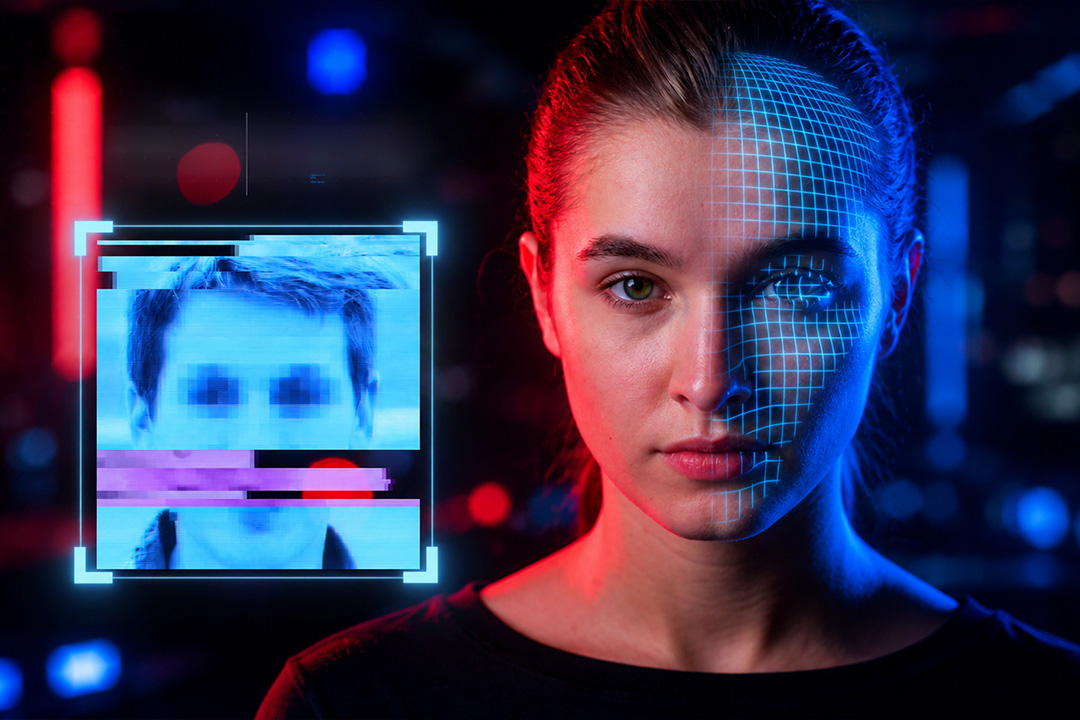
A reverse image search has long been one of the more reliable ways to catch a synthetic identity using a stolen or stock photo. A deepfake-generated face has no prior existence anywhere online, defeating this detection method entirely. This alone represents a meaningful upgrade in a synthetic identity's ability to pass visual scrutiny.
Passing Video-Based Liveness Checks
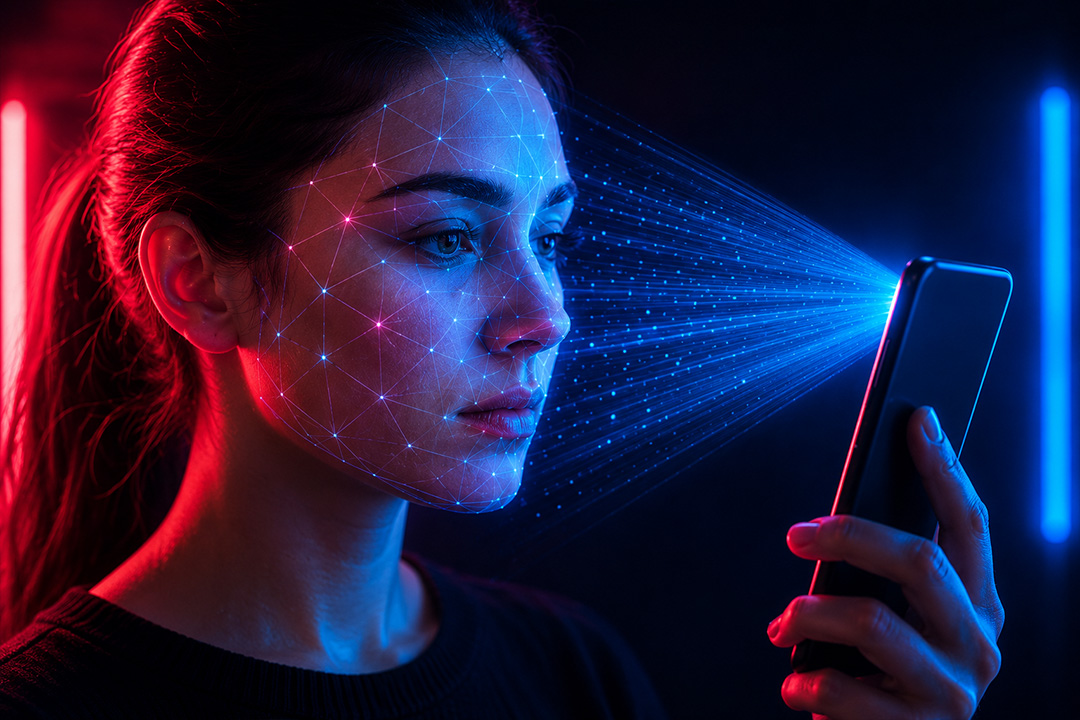
As digital onboarding has increasingly required video-based liveness verification, synthetic identity operations have adapted by pairing their fabricated data profiles with deepfake or face-swap video capable of passing these checks, closing what was previously one of the more effective defenses against purely data-based synthetic identities.
Voice Verification for Account Servicing
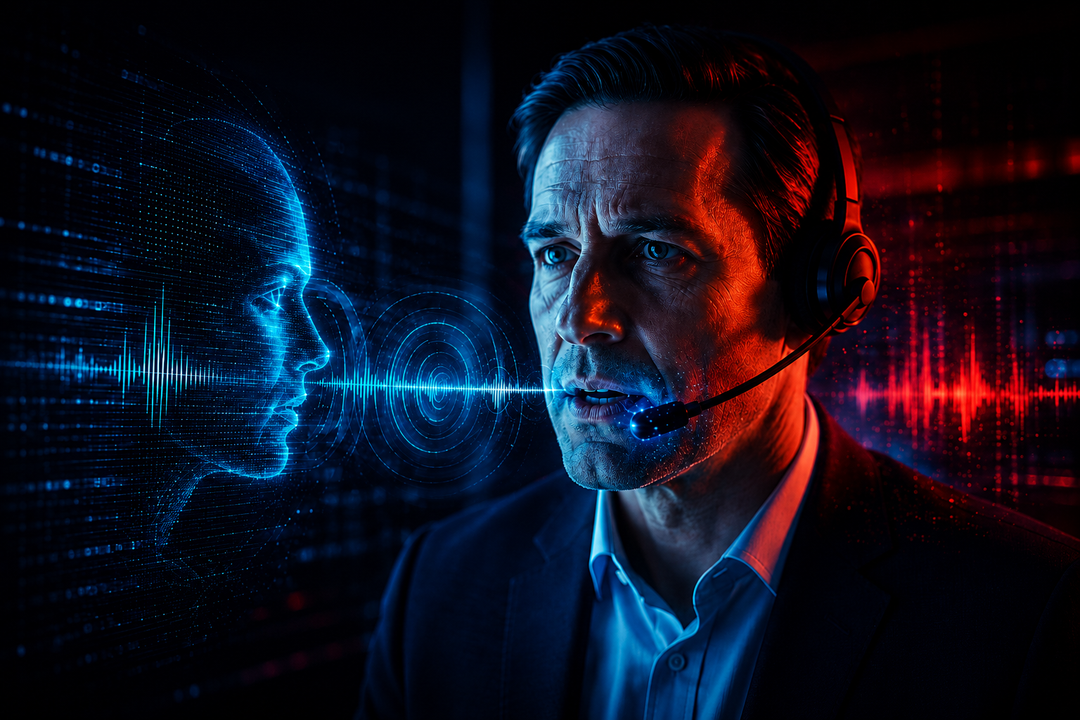
Synthetic identities used for ongoing account activity, not just initial onboarding, increasingly incorporate cloned or synthetic voice to pass phone-based verification during account servicing calls, extending the fraud's viability well beyond the initial account opening.
Scaling Identity Creation
Generative tools have also lowered the cost and effort required to produce large volumes of distinct synthetic faces, allowing fraud operations to scale the number of synthetic identities they cultivate simultaneously in ways that were more labor-intensive when each identity required sourcing a unique stolen or stock image.
Why This Convergence Is Particularly Difficult to Detect
Each Component Can Look Individually Legitimate
A fabricated data profile, examined alone, may closely resemble a legitimate thin-file applicant. A generated face, examined alone, may pass standard image quality and liveness checks. Neither element carries the more obvious red flags, a stolen photo appearing elsewhere online, an implausible data combination, that made earlier synthetic identity fraud more detectable.
Detection Systems Are Often Siloed by Threat Type
Many institutions maintain separate detection systems for identity fraud and for deepfake or synthetic media detection, built by different teams against different threat models. A convergence attack that requires both data-pattern analysis and media forensics analysis can fall into the gap between these systems if they aren't integrated.
The Fraud Often Cultivates Legitimacy Before Striking
As with traditional synthetic identity fraud, deepfake-enabled versions frequently build a period of legitimate-looking activity before executing a larger fraud event, meaning the deepfake-generated identity may pass months of scrutiny before the fraud pattern becomes apparent.
How Institutions Are Adapting to This Convergence
Integrating Media Forensics Into Identity Verification Workflows
Rather than treating deepfake detection and synthetic identity detection as separate disciplines, institutions are increasingly building integrated workflows where media forensics signals, indicators that a submitted face or video may be generated rather than photographed, feed directly into the broader identity risk assessment.
Cross-Referencing Generated Face Detection With Data Pattern Analysis
Detecting a generated face alone doesn't confirm fraud, since legitimate use cases for synthetic media exist. But combined with data pattern signals characteristic of synthetic identity construction, thin credit history assembled unusually quickly, identifiers with inconsistent origin patterns, the combination becomes a much stronger fraud signal than either alone.
Continuous Monitoring Rather Than Point-in-Time Checks
Because deepfake-enabled synthetic identities are specifically designed to pass onboarding checks convincingly, institutions are extending monitoring well beyond the initial verification moment, watching for behavioral and biometric consistency, or inconsistency, over the life of the account.
Consortium-Level Detection of Generated Face Reuse
Some fraud prevention efforts now look for the same or similar generated faces appearing across multiple accounts or institutions, since fraud operations scaling synthetic identity creation may reuse generation techniques or source models in ways that create detectable patterns across a broader dataset than any single institution can see alone.
Helping institutions build this kind of integrated detection, spanning both media forensics and traditional identity fraud analysis, is central to the identity verification hardening work Deepdive Forensics Lab does with financial institutions confronting this convergence directly.
A Misconception Worth Correcting
There's a tendency to treat synthetic identity fraud and deepfake fraud as separate problems requiring separate teams and separate tools. This convergence makes that separation increasingly costly. An institution with strong data-pattern fraud detection but no media forensics capability, or vice versa, is likely to miss fraud that specifically exploits the gap between those two disciplines.
The Bottom Line
Deepfake technology has removed one of the more reliable weaknesses synthetic identity fraud used to carry, dependence on stolen or stock imagery that could be traced or flagged. A generated face has no prior digital footprint to expose it, and generated voice extends that same advantage into phone-based verification.
Institutions responding effectively are integrating media forensics directly into their identity fraud detection workflows, rather than treating the two as separate disciplines handled by separate teams. The fraud patterns exploiting this convergence are specifically designed to slip through that organizational gap.
Helping institutions close that gap and build integrated detection across both disciplines is the work Deepdive Forensics Lab does through its identity verification hardening services.


.svg)
.svg)
.svg)
.svg)