

.png)
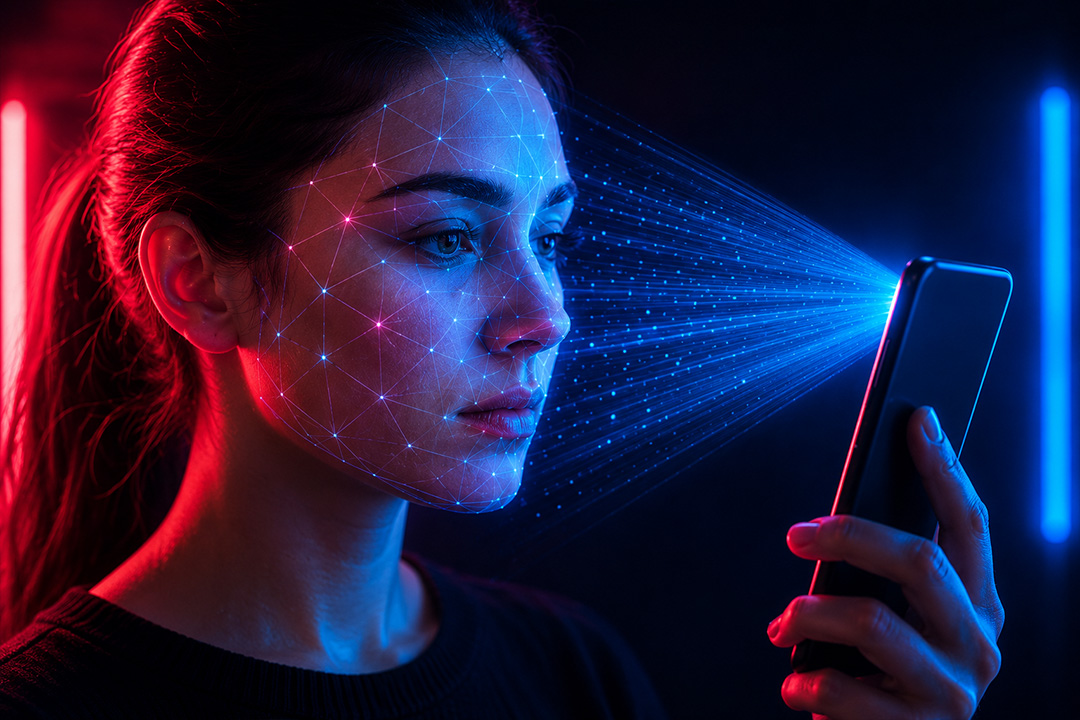
Digital onboarding depends on a simple but increasingly fragile assumption: that the person presenting a face to the camera is physically present, alive, and matches the identity document they've submitted. Liveness detection exists specifically to verify that assumption, and it has become one of the most important defenses institutions have against deepfake-enabled identity fraud during account opening. It is also, despite its growing sophistication, far from a solved problem.
This post explains how liveness detection actually works, the different approaches institutions use, and where current systems remain vulnerable to increasingly capable synthetic media attacks. This sits at the center of the identity verification hardening work Deepdive Forensics Lab does with institutions building safer digital onboarding pipelines.
What Liveness Detection Is Actually Checking For
Liveness detection is designed to distinguish a real, physically present human from a spoofed representation of one, whether that's a printed photo, a video replay, a mask, or increasingly, a deepfake generated or manipulated in real time. The goal isn't just to confirm a face matches an ID document. It's to confirm the face being presented belongs to a live person actually present at the camera in that moment.
This distinction matters because face-matching alone can be defeated relatively easily with a high-quality photo or video of the target, even without sophisticated deepfake technology. Liveness detection adds a layer specifically meant to close that gap.
Passive vs. Active Liveness Detection
Passive Liveness Detection
Passive methods analyze a single image or short video capture for signals consistent with a live human presence, without requiring the user to perform any specific action. This includes checking for texture and reflection patterns consistent with real skin rather than a screen or printed photo, analyzing subtle involuntary movements, and looking for signs of a screen replay, such as moire patterns or unnatural light reflection.
Passive detection has the advantage of being fast and low-friction for legitimate users, but it faces growing pressure from increasingly realistic deepfake video that can replicate many of the passive signals it looks for.
Active Liveness Detection
Active methods require the user to perform a specific action, turning their head, blinking on command, following an on-screen prompt, that the system verifies in real time. This is generally considered more robust against spoofing, since it requires an attacker to respond convincingly to unpredictable, real-time instructions rather than simply presenting pre-existing media.
Well-designed active liveness systems randomize their challenges specifically to prevent attackers from pre-recording a response to a predictable prompt sequence.
Why Deepfakes Have Made This Harder
Real-Time Face Swap Can Now Respond to Active Challenges
The most significant shift in this space has been the emergence of real-time deepfake tools capable of responding to active liveness challenges, head turns, blinks, specific movements, with low enough latency to pass systems that weren't designed with this capability in mind. This has eroded the advantage active detection previously held over passive methods.
Injection Attacks Bypass the Camera Entirely
Rather than presenting a deepfake to a physical camera, more sophisticated attacks inject synthetic video directly into the data stream the verification system receives, bypassing the physical camera capture process altogether. This class of attack requires an entirely different defensive approach than detecting a spoofed image presented to a real camera.
Quality Gaps Are Narrowing
Early liveness detection systems could rely on visible quality gaps, unnatural texture, inconsistent lighting, poor edge blending, between a spoofed presentation and a genuine live capture. Diffusion-based and increasingly sophisticated real-time generation methods have narrowed this gap considerably, requiring detection systems to look for more subtle and harder-to-fake signals.
Core Techniques Modern Liveness Systems Use
1. 3D Depth Analysis
Using depth-sensing camera hardware where available, systems can verify that a face has genuine three-dimensional structure rather than being a flat image or screen presentation. This remains one of the more robust defenses against simple spoofing, though it depends on hardware capability not universally available across devices.
2. rPPG-Based Physiological Verification
Detecting subtle blood-flow-related color changes in skin, the same technique used in broader deepfake video detection, provides a physiological signal that remains genuinely difficult for real-time generation systems to replicate convincingly and consistently.
3. Micro-Expression and Involuntary Movement Analysis
Genuine human faces exhibit subtle, largely involuntary micro-movements that are difficult to replicate convincingly in synthetic media, particularly under the specific and somewhat unpredictable conditions of a live verification session.
4. Injection Attack Detection
Increasingly, liveness systems incorporate checks specifically designed to detect whether the video stream is coming from a genuine camera capture or being injected through virtual camera software or other stream manipulation methods, addressing the bypass vulnerability described above.
5. Randomized, Unpredictable Active Challenges
Systems that vary their active challenge sequences unpredictably, rather than relying on a fixed or easily anticipated set of prompts, raise the difficulty bar for an attacker attempting to prepare a response in advance.
Understanding both the strengths and current gaps in these techniques is central to the identity verification hardening training Deepdive Forensics Lab provides to institutions evaluating or deploying liveness detection systems.
Evaluating a Liveness Detection Vendor: What to Ask
Institutions selecting or auditing a liveness detection system should be asking pointed questions rather than accepting vendor accuracy claims at face value.
- What specific spoofing methods, including real-time deepfake and injection attacks, has the system been independently tested against
- Is testing based on internal benchmarks alone, or has the vendor undergone independent, third-party evaluation
- How frequently is the system updated to address newly emerging spoofing techniques
- Does the system detect injection attacks specifically, not just physically presented spoofs
- What is the system's false acceptance rate under adversarial testing conditions, not just standard benchmark conditions
A Misconception Worth Correcting
There's a common assumption that liveness detection, once deployed, is a permanent solved checkpoint. In practice, this is an active arms race similar to every other area of deepfake detection. A liveness system that was highly effective against the spoofing techniques available two years ago may show meaningfully degraded performance against current real-time deepfake and injection attack methods, and institutions need to treat evaluation as an ongoing process, not a one-time procurement decision.
The Bottom Line
Liveness detection remains one of the most important defenses institutions have against deepfake-enabled identity fraud during digital onboarding, but it is not a static or fully solved technology. Real-time deepfakes capable of responding to active challenges, along with injection attacks that bypass the camera entirely, have meaningfully narrowed the advantage these systems once held over simpler spoofing methods.
Institutions that treat liveness detection as a single deployed checkpoint, rather than a system requiring ongoing evaluation against evolving threats, are working with a false sense of security. The strongest onboarding defenses pair robust liveness technology with the kind of layered verification, document cross-checks, behavioral analysis, continuous monitoring, needed to catch what any single system might miss.
Helping institutions evaluate, deploy, and continuously stress-test liveness detection as part of a broader onboarding defense is the work Deepdive Forensics Lab does through its identity verification hardening services.


.svg)
.svg)
.svg)
.svg)