

.png)
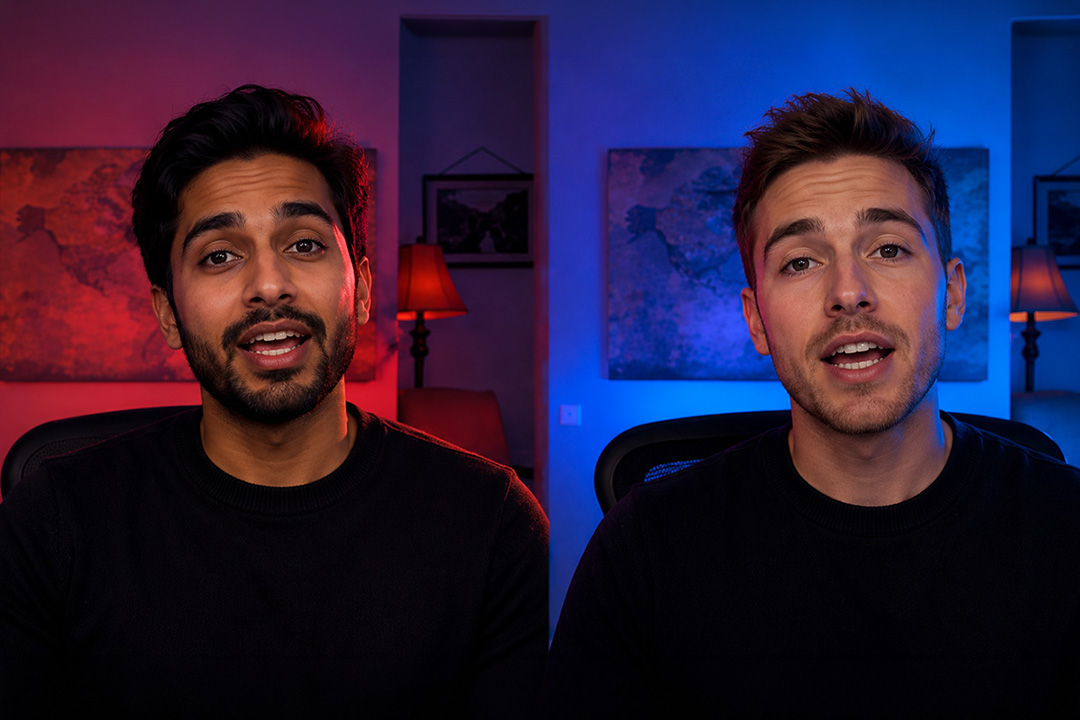
A hiring manager conducts a polished, professional video interview. The candidate answers well, the resume checks out, and the role gets filled. Weeks later, IT discovers the new hire has been accessing internal systems and exfiltrating data, using an identity that doesn't match the person who actually shows up to work, if anyone shows up at all. The interview itself was conducted using deepfake video, sometimes with a real accomplice sitting off camera feeding answers, sometimes with a fully synthetic face layered over a different person entirely.
This post breaks down how deepfake job interview fraud actually works, why remote hiring pipelines have become a specific target, and what companies can do to protect their hiring process. It also addresses why this threat has been slower to gain attention than voice cloning fraud, despite carrying similarly serious consequences. Building this kind of hiring-specific defense is part of the identity verification hardening work Deepdive Forensics Lab does with corporate clients.
How Deepfake Interview Fraud Actually Works
Unlike CEO voice cloning, which impersonates a known internal figure, deepfake interview fraud typically involves a fabricated or borrowed identity used to gain employment under false pretenses. There are a few documented variations.
Real-Time Face Swap During Video Interviews
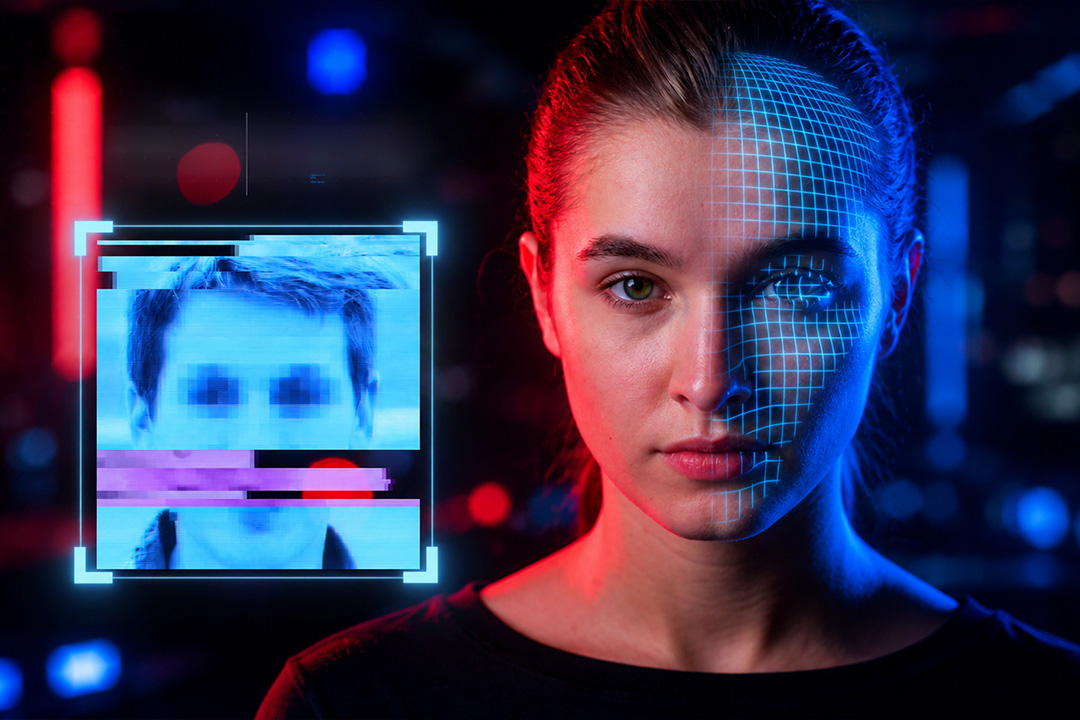
Using consumer-accessible face-swap software, an attacker can overlay a different face, sometimes a fabricated composite, sometimes borrowed from a real person's identity, onto their own live video feed during a remote interview. Modern tools can do this with low enough latency to hold a real-time conversation convincingly.
Coached Impersonation
In some documented cases, the person appearing on camera isn't using synthetic video at all, but is instead a paid stand-in coached to answer questions on behalf of a different, more qualified candidate, sometimes with real-time answers being fed through an earpiece or a hidden second screen. This overlaps with deepfake fraud when synthetic voice or video is layered on top to obscure the stand-in's actual identity.
Stolen Identity Combined With Synthetic Media
Some schemes combine a legitimate person's stolen professional identity, resume, credentials, LinkedIn profile, with a deepfake video presence, allowing an unrelated individual to interview and be hired under someone else's verified background.
Why Remote Hiring Pipelines Are Especially Exposed
The shift toward fully remote hiring, accelerated over the past several years, removed several verification checkpoints that in-person hiring processes took for granted. There's often no in-person ID check, no physical presence to confirm consistency across interview rounds, and video call quality can itself provide cover for the subtle inconsistencies that might otherwise reveal manipulation.
Roles involving remote access to sensitive systems, IT, engineering, finance operations, are particularly attractive targets, since a successfully placed fraudulent hire can gain legitimate credentialed access to internal infrastructure without ever triggering a traditional security breach.
Why This Threat Has Been Slower to Get Attention
CEO voice cloning fraud produces an immediate, quantifiable loss, a wire transfer that's gone. Interview fraud is different. The damage often isn't apparent until well after hiring, and it can take several forms: data theft, insider access sold to third parties, payroll fraud through a fabricated identity, or in some documented geopolitical cases, sanctioned individuals gaining employment at companies through false identities to generate revenue or gain system access.
Because the harm is delayed and often discovered through unrelated security incidents, many organizations don't yet connect it back to a compromised hiring process, which has slowed the broader industry response relative to more immediately visible fraud types.
How Companies Are Responding
Multi-Round Verification With Consistency Checks
Organizations catching this fraud pattern most effectively use multiple interview rounds with different interviewers, then cross-check for subtle inconsistencies, background details, mannerisms, and technical answers, across sessions. Fabricated identities and coached stand-ins are harder to sustain consistently across several independent conversations.
Live, Unscripted Verification Moments
Asking candidates to perform an unscripted, low-latency task during a video call, turning their head at an unusual angle, holding up a specific object, responding to an unexpected question requiring genuine improvisation, can expose the limits of real-time face-swap technology, which still struggles with sudden, non-standard movements.
In-Person Requirements for Sensitive Roles
For roles with access to highly sensitive systems or data, some organizations have reintroduced in-person interview or onboarding requirements, at least for a final verification stage, even when the bulk of the process remains remote.
Government-Issued ID Verification Tied to Liveness Detection
Pairing document verification with liveness detection technology, which checks that the person presenting an ID is a live human matching that document in real time, closes some of the gap left by fully remote hiring, though these systems carry their own detection limitations against sophisticated attacks.
Cross-Referencing Digital Footprint Consistency
HR and security teams are increasingly cross-referencing a candidate's claimed professional history against their broader digital footprint, LinkedIn activity history, consistency of professional network connections, and other signals that are harder to fabricate convincingly at short notice.
Helping organizations build this kind of layered hiring verification process is a growing part of the identity verification hardening services Deepdive Forensics Lab provides, particularly for companies hiring into sensitive technical or financial roles.
A Misconception Worth Correcting
There's an assumption that this threat mainly targets large, well-resourced companies with high-value systems to protect. In practice, smaller and mid-sized companies with fully remote hiring pipelines and less mature verification processes are often easier, and therefore more attractive, targets. Company size correlates less with vulnerability here than the maturity of the hiring verification process itself.
The Bottom Line
Deepfake job interview fraud represents a hiring-pipeline-specific risk that most corporate security frameworks weren't originally built to address. It exploits the same trust assumptions that made remote hiring efficient in the first place, and the consequences, insider access, data theft, identity-based fraud, often surface well after the initial hire, making the problem harder to trace back to its source.
Companies that treat hiring verification as a security function, not just an HR process, are better positioned to catch this before a fraudulent hire gains system access. That means multi-round consistency checks, live verification moments, and in-person requirements for the most sensitive roles, layered together rather than relying on any single safeguard.
Building this kind of hiring-specific defense before a fraudulent hire slips through is the work Deepdive Forensics Lab does through its identity verification hardening services.

.svg)
.svg)
.svg)
.svg)